
Vietnamese
Vietnamese Caramel Pork (Thịt Kho Tộ)
Tender, slow-braised pork shoulder in a dark, sticky-sweet and savoury caramel glaze with fish sauce, garlic and shallot. Serve over steamed jasmine rice.
- Prep
- 10 mins
- Cook
- 1 hr 30 mins
- Total
- 1 hr 40 mins
- Serves
- 4
- Difficulty
- Medium
- Calories
- 730 per serving
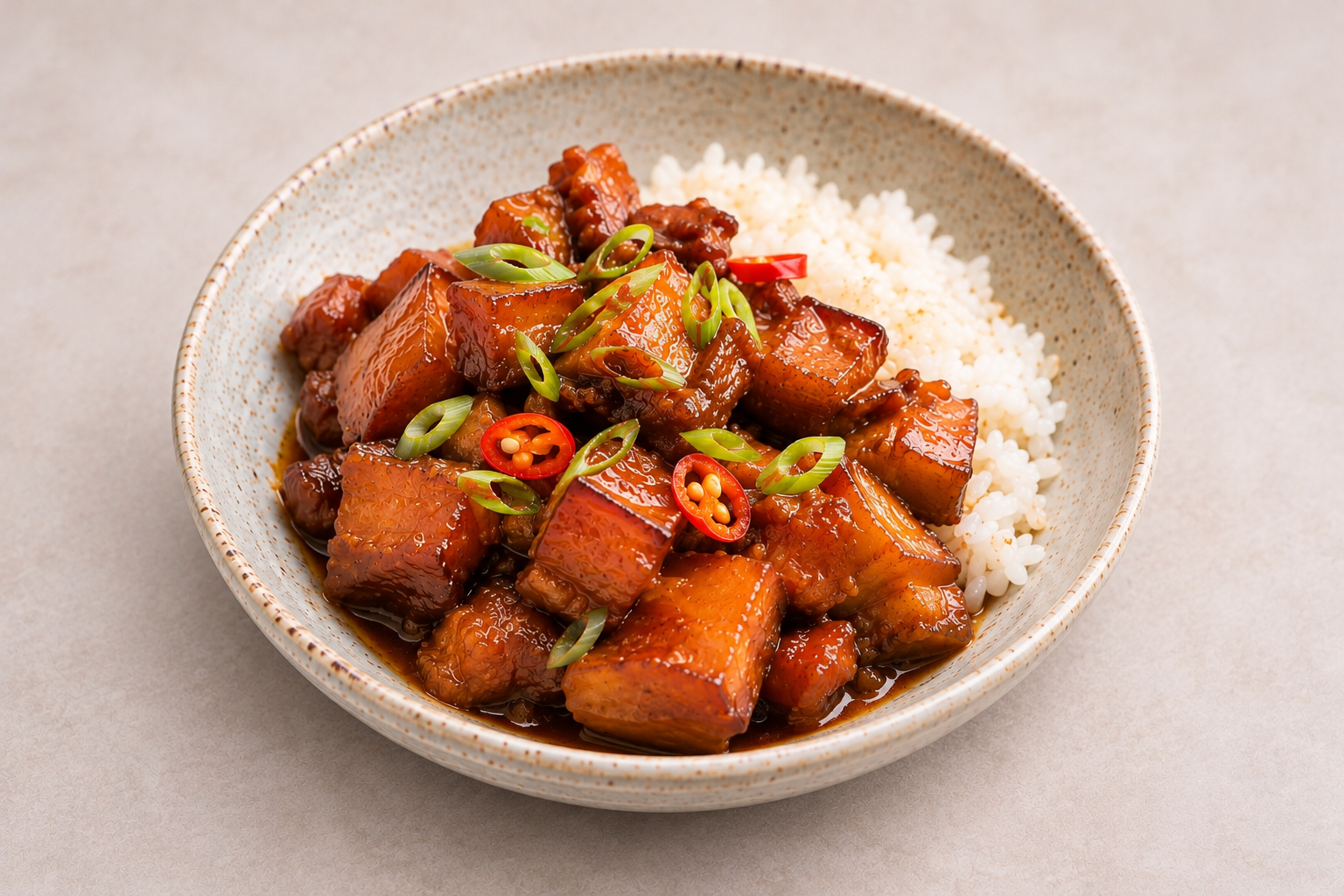
Tender pieces of slow-braised pork shoulder coated in a rich, dark caramel glaze. Fish sauce, garlic and shallot add depth, while coconut water gives the braising liquid a subtle sweetness without a coconut flavour. This version uses palm sugar and takes care to develop a deep amber caramel before anything else goes in.
Method
-
Cut the pork shoulder into 3cm cubes, trimming away any particularly large pieces of excess fat. Finely slice the shallot and mince the garlic. Measure out the coconut water and fish sauce so everything is ready before you make the caramel.
-
Put the palm sugar and water in a large, heavy-based saucepan over a medium heat. Stir initially until the sugar begins to dissolve and the mixture starts bubbling. Then let the caramel develop a deep amber-brown colour before adding anything else, watching carefully as it changes from pale golden to a deeper amber. Swirl the pan gently if necessary but avoid stirring once the sugar has dissolved. Do not add the pork while the caramel is still pale, and take care as hot caramel can cause serious burns.
-
Once the caramel is a deep amber colour, carefully add the pork. The caramel will bubble vigorously and may harden around the cooler meat, which is normal. Add the shallot, garlic, fish sauce, white pepper and coconut water and stir thoroughly to distribute the caramel and seasonings evenly. Bring back to a steady simmer.
-
Reduce the heat to maintain a fairly energetic simmer (setting 5 on the original cook's hob) and leave the pan uncovered. Cook for about 1 hour 30 minutes, stirring once or twice to prevent sticking, until the liquid has gradually reduced and the pork is increasingly tender. If the liquid evaporates too quickly or starts catching on the bottom, reduce the heat slightly.
1 hr 30 mins -
As the liquid reduces, the remaining fat will begin to separate. Stir the pork gently to coat each piece in the concentrated caramel sauce. Continue cooking until the liquid has almost completely evaporated and the pork is dark, glossy and a rich mahogany brown with a sticky coating. If the pork is not tender when the liquid has nearly gone, add about 125 ml water and keep simmering until tender.
-
Remove from the heat, taste the sauce and adjust the seasoning if necessary. Scatter over the sliced chilli, spring onions and coriander, then serve immediately over steamed jasmine rice, spooning any remaining glaze over the pork.
Serving suggestions
Serve immediately over steamed jasmine rice, spooning any remaining caramel glaze over the pork. Steamed Asian greens, or lightly pickled cucumber and carrot, balance the richness and sweetness.
Cook’s tips
Do not rush the caramel: let the palm sugar and water reach a deep amber-brown before adding the pork, and judge by colour rather than time. Palm sugars vary in colour and moisture, and grated or finely chopped palm sugar melts more evenly. Aim for a steady, active simmer rather than a violent boil, reducing the heat slightly if the liquid evaporates too quickly or catches on the bottom. Pork shoulder is ideal because its connective tissue breaks down during slow cooking; pork belly can be used but is richer. Use coconut water, not coconut milk. If the liquid reduces before the pork is tender, add about 125 ml water and keep simmering. Leftovers keep in an airtight container in the fridge for up to 3 days; reheat gently with a splash of water to loosen the glaze.